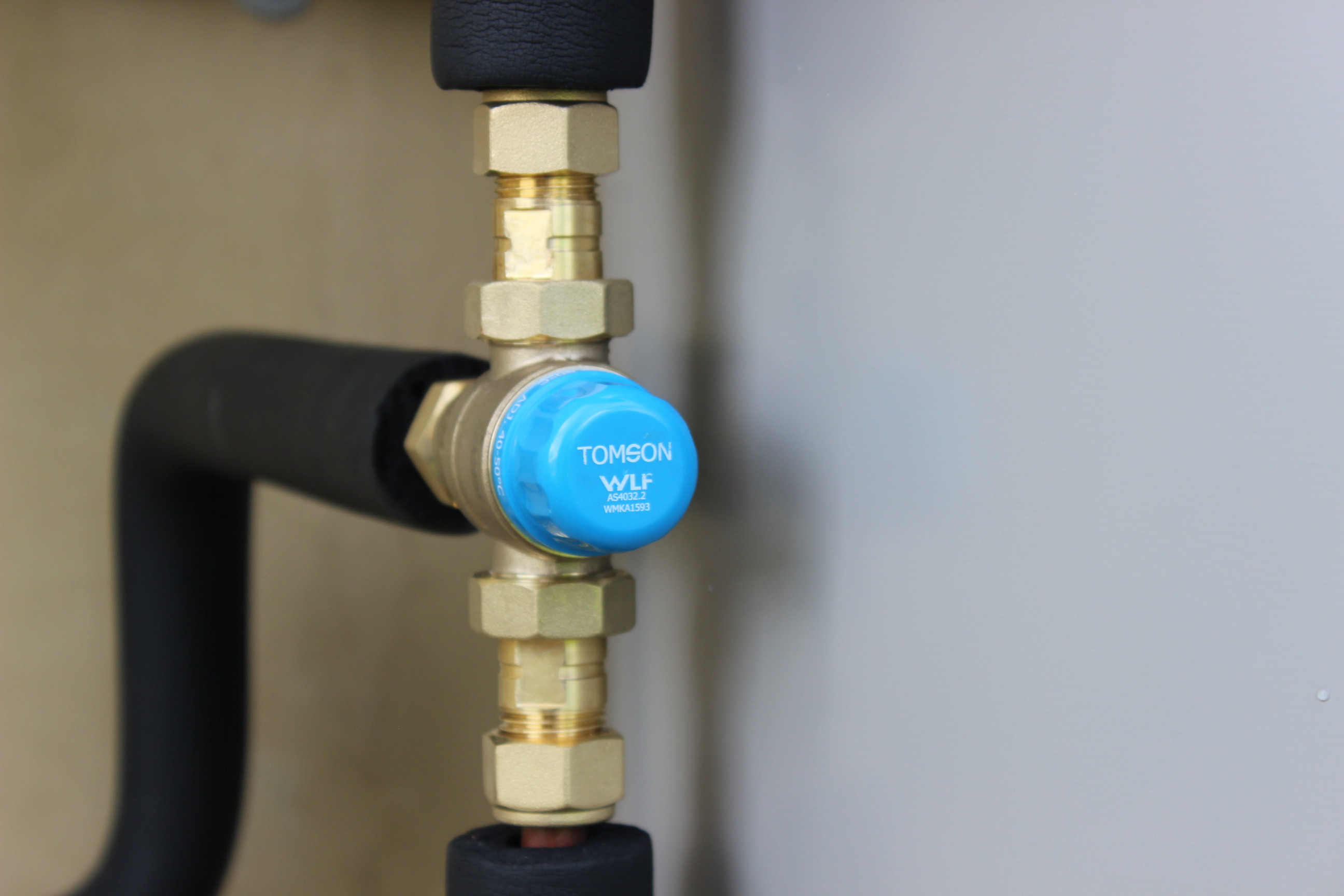

What Is a Tempering Valve?
A tempering valve — also called a thermostatic mixing valve or TMV in some contexts — is a device installed on your hot water system that blends hot water from the tank with cold water to deliver a safe, consistent temperature at the tap. Without one, water from the tank at full temperature flows directly to bathroom taps and showers, creating a scalding risk — particularly for young children and elderly people who may not react quickly enough to adjust the temperature.
Why Hot Water Tanks Are Set Higher Than You'd Expect
You might wonder why hot water systems are set to store water at 60 degrees Celsius — a temperature that would cause a serious burn in seconds. The reason is Legionella bacteria, which can colonise warm water and cause Legionnaires' disease. Storing water at 60°C or above kills Legionella and keeps the system safe. The tempering valve then brings the delivery temperature down to 50°C at most bathroom outlets — hot enough for comfortable use, cool enough to prevent scalding in the time it takes to respond to unexpected heat.
What Australian Standards Require
In Australia, tempering valves are required by law for all new hot water system installations in residential buildings, and must be fitted to bathroom outlets including showers, baths, and hand basins. In Queensland, this requirement applies to all new installations and replacements. If your hot water system has been recently replaced and a tempering valve wasn't installed, the work may not be compliant.
Signs Your Tempering Valve May Need Attention
Tempering valves can wear over time. Signs that yours may need servicing or replacement include water that is consistently too hot at bathroom taps despite the hot water system being set correctly, temperature fluctuations during a shower when no other water is running, or water that runs cold before gradually warming in a pattern that suggests the valve isn't blending correctly. A licensed plumber can test the delivery temperature and assess whether the valve is functioning within the required range.
Under Sink Hot Water and Point-of-Use Systems
Under sink hot water systems — small units that deliver instant hot water at a kitchen or bathroom basin — typically operate at lower temperatures and may have different compliance requirements to central storage systems. If you're installing one of these units, discuss the tempering requirements with your plumber to ensure the installation meets current standards.
Tempering Valve Installation and Replacement
Allied Plumbing installs and replaces tempering valves as part of hot water system installations and as standalone jobs across the Sunshine Coast and Noosa. If you're unsure whether your current system has a compliant tempering valve, we can check and advise. Call 0428 411 487 or visit alliedqld.com.au.